In Madhya Pradesh and Chhattisgarh, the biggest physical risks to a rooftop solar system are not heat or rain but pre-monsoon thunderstorms: sudden gusts that test the mounting structure, and lightning that can send surges through panels, cables and the inverter. A system built with proper earthing, a lightning arrester, surge protection devices and a wind-rated structure handles these storms routinely. Here is what each part does and what to check.
Key Takeaways
- Three separate protections: equipment earthing, a lightning arrester with its own earth, and surge protection devices on DC and AC sides.
- Structures must be designed for regional wind loads, with galvanised steel and proper anchoring.
- Most storm damage comes from shortcuts at installation — thin structures, missing SPDs, shared or poor earthing.
- Check earthing, connectors and structure bolts once a year, ideally before the monsoon.
- Insurance and documentation help if damage does occur.
Why storms matter in central India
April to June brings convective thunderstorms across the region — hot afternoons followed by sudden squalls, dust storms and intense lightning. Gusts can be strong enough to lift poorly anchored structures, and lightning activity is high in parts of Madhya Pradesh and Chhattisgarh. A rooftop array is the highest metal object on many houses, so it must be designed to deal with both wind and electrical surges safely.
Protection 1 — Equipment earthing
Every metal part of the system — panel frames, mounting structure and inverter body — is bonded together and connected to dedicated earth pits. This keeps exposed metal at earth potential, so a fault or induced voltage cannot give someone a shock and current has a safe path to ground. Good practice uses proper earth electrodes with low resistance, copper or GI conductors of adequate size, and regular testing. Earth pits should be accessible and labelled, and resistance checked at least once a year.
Protection 2 — Lightning arrester
A lightning arrester is a pointed conductor mounted above the array, connected by a separate down conductor to its own earth pit. It provides a preferred path for a direct strike, keeping the current away from panels and wiring. It should be positioned to cover the whole array, mounted higher than the panels, and its earth kept separate from the equipment earth as per standard practice. On tall buildings, hilltop sites and isolated farmhouses, it is essential.
Protection 3 — Surge protection devices
Even a strike nearby — not on your roof — can induce surges in long cable runs. Surge protection devices (SPDs) in the DC combiner box and on the AC side of the inverter divert these surges to earth before they damage the inverter, which is the most sensitive and expensive electronic part. SPDs should be of the correct type and voltage rating for solar DC and for the AC supply, and replaced if their indicator shows they have operated.
The structure — built for wind
- Hot-dip galvanised steel of adequate section, not thin painted mild steel that rusts and weakens.
- Design for wind load — the structure, its spacing and its anchoring should be designed for the region's wind speeds and the building height.
- Proper anchoring — chemical anchors into a sound RCC slab, or adequate ballast, without breaking waterproofing.
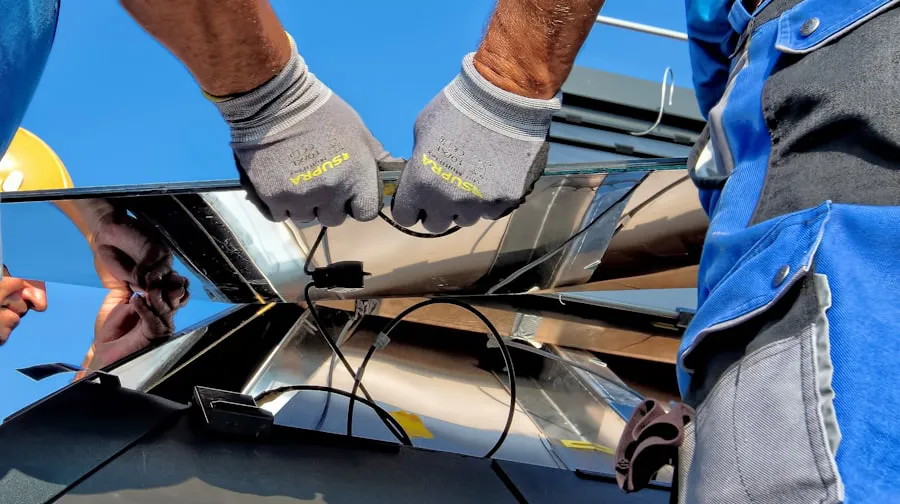
- Correct clamps and bolts — stainless or galvanised fasteners, tightened to specification; loose clamps let panels rattle and crack.
- Elevated structures need bracing — taller frames catch more wind.
Where shortcuts cause damage
When systems fail in storms, the cause is usually something saved at installation: a structure made from thin sections, no lightning arrester, SPDs left out to cut cost, structure and arrester sharing one poor earth pit, or DC cables run loosely where wind whips them against edges. Each saves a little money and puts the whole investment at risk. Ask for these items to be listed by specification in the quotation.
A pre-monsoon checklist
- Walk around the array and look for loose clamps, bent rails or missing bolts.
- Check that DC cables are clipped and protected, not hanging or rubbing on edges.
- Look at the SPD indicators in the DC and AC boxes; replace any that have operated.
- Have earth resistance tested and earth pits watered and cleaned if needed.
- Confirm the lightning arrester and its down conductor are intact.
- Clear debris that wind could throw onto panels.
After a storm
Check the monitoring app: a sudden drop to zero may mean a tripped breaker or an operated SPD; a partial drop may mean a damaged panel or a loose string connection. Do not climb onto a wet roof or touch panels and cables yourself — DC from panels is live whenever there is light. Call your installer, photograph any visible damage, and inform your insurer if you have cover. Keep the commissioning report, panel and inverter serial numbers and warranty documents in one folder — insurers and manufacturers will ask for them, and having them ready shortens any claim considerably.
A note on hybrid and battery systems
Batteries and hybrid inverters add electronics that are just as sensitive to surges as the main inverter. The battery cabinet should be bonded to the equipment earth, located indoors away from water ingress, and protected by its own breakers.
How Sunvera builds for storms
Sunvera Energy installs systems across Madhya Pradesh and Chhattisgarh with hot-dip galvanised structures anchored for regional wind loads, dedicated equipment earthing, a lightning arrester with its own earth, and DC and AC surge protection as standard — listed by specification in every quotation. Its AMC includes a pre-monsoon inspection of structure, connectors, SPDs and earthing. For an inspection of your existing system, call +91 77103 07937.
Frequently Asked Questions
A rooftop array is often the highest metal object on a house, so it must be protected. A lightning arrester with its own earth provides a preferred path for a strike, while equipment earthing and surge protection devices protect panels, cables and the inverter.
Three separate ones: equipment earthing bonding all metal parts to dedicated earth pits; a lightning arrester above the array with its own down conductor and earth; and surge protection devices on both the DC and AC sides of the inverter.
Only if the structure or anchoring is weak. Hot-dip galvanised steel designed for regional wind loads, proper chemical anchors or ballast, correct clamps and bracing on elevated frames let systems ride out pre-monsoon storms routinely.
Check the monitoring app for drops in output, but do not climb a wet roof or touch panels and cables, as DC is live in daylight. Call your installer, photograph any visible damage and inform your insurer if you have cover.
Get a free site survey & PM Surya Ghar subsidy guidance.