A solar water pump lifts irrigation water through daylight hours with no diesel and no dependence on night-time farm supply. Under the central PM-KUSUM scheme, delivered in Madhya Pradesh and Chhattisgarh through state agencies, eligible farmers can get a pump at a fraction of its full cost. This guide explains how the pumps work, how to size one, and how the scheme works.
Key Takeaways
- A solar pump runs from panels directly — no battery, no grid, no fuel — pumping whenever the sun is up.
- Typical farm sizes are 3, 5 and 7.5 HP; the right size depends on water depth (head), daily water need and source.
- Diesel pumping costs ₹150–250 a day in season; a solar pump's running cost is close to zero for 20+ years.
- PM-KUSUM Component B funds standalone solar pumps; Component C solarises existing grid-connected pumps.
- In MP and CG, applications go through the state nodal agency (MP Urja Vikas Nigam; CREDA in Chhattisgarh); farmer share depends on the state's current scheme rules.
How a solar pump works
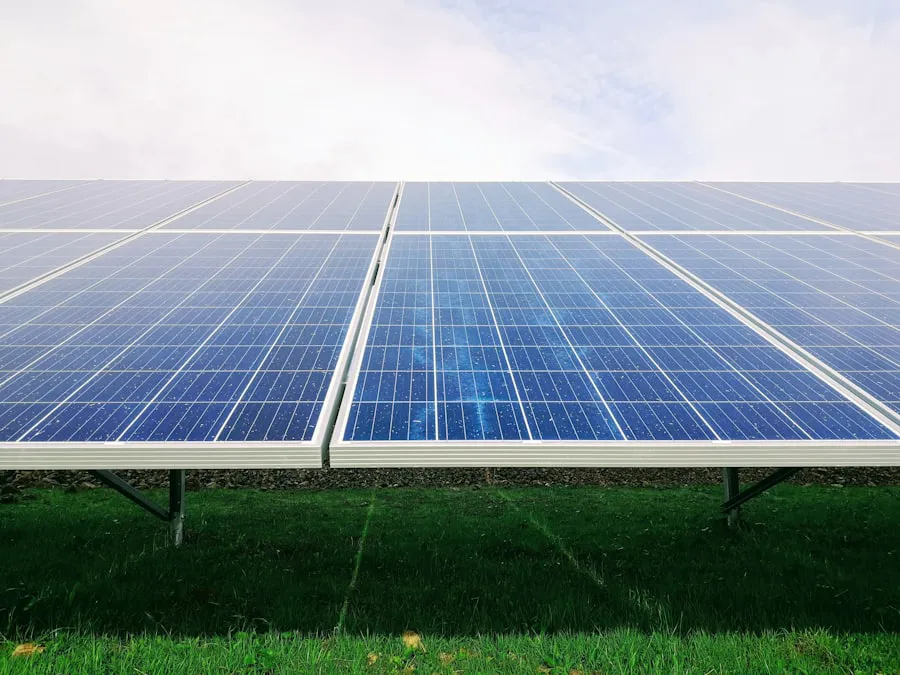
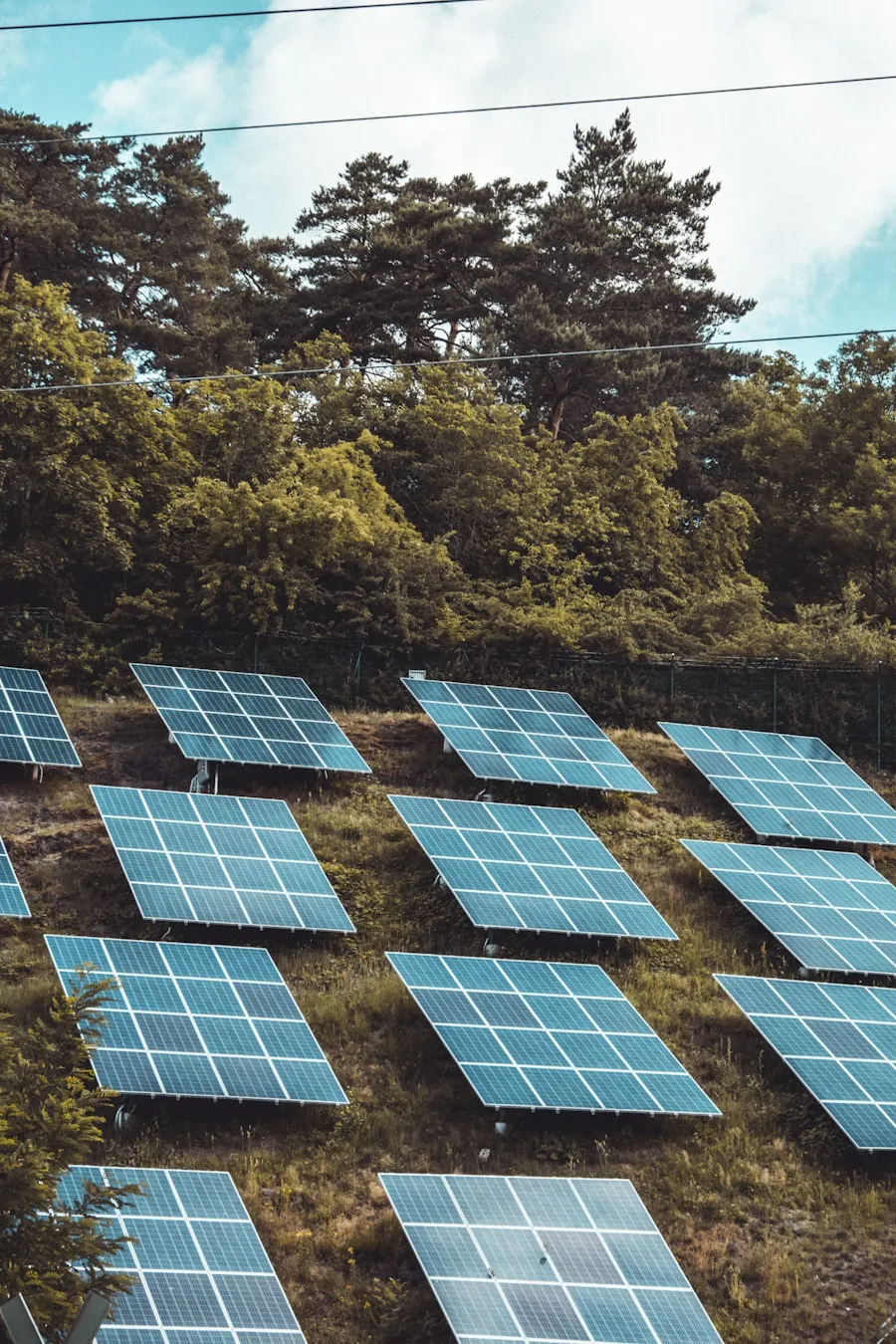
Panels on a ground-mounted frame feed a pump controller — essentially an inverter — which drives a submersible or surface pump motor. There is no battery: the pump runs when the sun shines, speeding up and slowing down with sunlight, and the water itself is the storage, filling the field, a tank or a farm pond. Most systems use AC submersible pumps for borewells and surface pumps for open wells, canals and ponds. Modern controllers have dry-run protection, so the motor stops if the water level falls, and many offer remote monitoring.
What size do you need?
Pump size depends on three numbers: the total head (depth of water plus the height it is lifted, plus pipe losses), the daily water requirement of your crop and land, and the yield of the source — a borewell that gives 10,000 litres an hour cannot feed a pump rated for 30,000.
| Pump | Panel capacity | Typical head | Daily water (sunny day) | Suits |
|---|---|---|---|---|
| 3 HP | ≈ 3 kW | up to 50–70 m | ≈ 1–1.5 lakh litres at 30 m | 2–4 acres, vegetables, shallow bore |
| 5 HP | ≈ 4.8 kW | up to 70–100 m | ≈ 1.8–2.5 lakh litres at 30 m | 4–8 acres, wheat, soybean, paddy |
| 7.5 HP | ≈ 6.75 kW | up to 100–150 m | ≈ 2.8–3.5 lakh litres at 30 m | 8+ acres, deep borewells |
These are indicative; output falls as head rises. The survey measures the static water level and source yield before sizing, because an oversized pump on a weak borewell simply runs dry.
The economics
A 5 HP diesel pump running six hours a day burns about 6–8 litres of diesel — ₹150–250 a day, or ₹15,000–25,000 a season, plus maintenance and the trip to fetch fuel. A solar pump has no fuel cost, needs only panel cleaning, and lasts 20 years or more. Even without any subsidy it pays for itself in a few seasons on a farm that irrigates regularly; with PM-KUSUM support the farmer's share is recovered far sooner. The other benefit is time: water comes during the day, not in the middle of the night when farm feeders are energised.
PM-KUSUM in plain words
PM-KUSUM (Pradhan Mantri Kisan Urja Suraksha evam Utthaan Mahabhiyan) is a central scheme of the Ministry of New and Renewable Energy with three parts:
- Component A — small solar power plants (typically 0.5–2 MW) on barren or fallow farmland, selling power to the DISCOM. For farmers and cooperatives with land to lease.
- Component B — standalone off-grid solar pumps to replace diesel pumps. This is the one most farmers mean when they say "KUSUM pump".
- Component C — solarising existing grid-connected agricultural pumps, so the farmer uses solar power and can sell surplus to the DISCOM.
Under Components B and C the central government funds a share of the cost and the state adds its own share; the remaining farmer contribution can partly be financed by a bank loan. The exact split and the farmer's payment differ by state, pump size and farmer category, and states revise them from time to time — so always confirm the current figures on the state agency's portal before paying anything.
How to apply in Madhya Pradesh and Chhattisgarh
Madhya Pradesh: solar pump schemes are run by the MP Urja Vikas Nigam (MPUVN), with online registration on its portal. Chhattisgarh: CREDA (Chhattisgarh State Renewable Energy Development Agency) runs the solar pump programme. In both states you will typically need:
- Aadhaar card and a bank account in the farmer's name
- Land records (khasra/B1) showing the land and water source
- Proof of the water source — borewell, well, canal or pond
- Passport photograph and mobile number
- For Component C, the agricultural connection details from the DISCOM
After registration and verification, the agency allots the pump through an empanelled vendor, installs, and inspects it. Sunvera Energy helps farmers check eligibility, prepare documents and understand the current farmer share, and supplies and installs solar pumps directly for farmers who want to buy outside the scheme or whose district quota is exhausted.
Five mistakes to avoid
- Buying by HP alone. Without the head and source yield, the size is a guess.
- Shading the panels. A tree shadow at noon cuts water output sharply; site the frame in open ground.
- Skipping dry-run protection. A burnt motor costs more than the controller feature.
- Paying an agent "registration fees". Government portals do not charge farmers to register.
- Ignoring theft protection. Use anti-theft fasteners and, in isolated fields, a fenced frame.
Get your pump sized
Send Sunvera Energy your borewell depth, water level, field size and crop on WhatsApp at +91 77103 07937. We serve farmers across Shivpuri, Guna, Ashoknagar, Balaghat, Bilaspur, Mungeli, Surajpur and neighbouring districts from offices at Pichhore, Gwalior, Balaghat and Bilaspur.
Frequently Asked Questions
A central scheme of the Ministry of New and Renewable Energy that funds solar for agriculture in three parts: small solar plants on farmland (Component A), standalone solar pumps (Component B) and solarisation of existing grid-connected pumps (Component C). States add their own share and deliver it through their nodal agencies.
It depends on total head, daily water need and source yield. As a rough guide, 3 HP suits 2–4 acres with a shallow bore, 5 HP suits 4–8 acres, and 7.5 HP suits larger farms or deep borewells. A survey of the water level and source yield is essential before sizing.
In Madhya Pradesh, through the MP Urja Vikas Nigam (MPUVN) portal; in Chhattisgarh, through CREDA. You typically need Aadhaar, a bank account, land records, proof of the water source and a mobile number. Confirm the current farmer share on the agency's portal before paying.
No. A solar pump runs directly from the panels through a controller and pumps whenever the sun is up; the water in the field, tank or pond is the storage. This keeps the system simple, cheap to maintain and long-lasting.
Get a free site survey & PM Surya Ghar subsidy guidance.