Buffalo dairies are part of the economy of every village and town in the Gwalior-Chambal region. Milk goes to the city morning and evening, and between the two milkings a dairy runs bulk milk chillers, milking machines, chaff cutters, water pumps and fans for the animals. In May and June, when the temperature crosses 45 °C, cooling for both milk and animals is a heavy load. Solar fits this pattern well. This guide explains how dairy owners in Gwalior, Morena, Bhind and Datia can size a system, protect milk during power cuts and work out payback.
Key Takeaways
- Dairy loads run mostly in daylight, which matches solar generation.
- A 5–15 kW plant on the shed roof suits most small and medium dairies.
- On a non-domestic tariff, payback of three to five years is typical.
- A battery or hybrid inverter protects milk chilling during feeder cuts.
- Sheds need non-penetrative mounting and storm-proof structures.
Where a dairy uses electricity
List every load before talking to an installer. A typical dairy has a bulk milk chiller or deep freezer, which is the largest and most important load; milking machines that run for an hour or two at each milking; a chaff cutter for green and dry fodder; a water pump for drinking water and washing; and fans and misters that keep buffaloes comfortable in summer. Lights in the shed and a small office complete the picture. Most of these run between morning and evening milking, when the sun is up.
Which connection is the dairy on?
This decides whether solar is worth it. A dairy run from the family home on a domestic meter can install a home system and claim the PM Surya Ghar subsidy of up to ₹78,000, with net cost of a 3 kW system about ₹1,02,000–1,22,000 in Madhya Pradesh. A dairy with its own non-domestic or commercial connection pays a higher tariff and gets no subsidy, but saves more per unit. If the farm only has a flat-rate agricultural connection used for irrigation, rooftop solar against it saves little; the dairy loads should be on their own metered connection for solar to pay.
Sizing the plant
In the Gwalior-Chambal region, each kW of solar makes about 1,450–1,500 units a year. Collect 12 months of bills and size for the average daytime use. As a rough guide:
- Small dairy, 10–20 animals: fans, a pump, a chaff cutter and a small chiller — 3–5 kW.
- Medium dairy, 20–50 animals: milking machines and a bulk chiller — 5–10 kW.
- Larger dairy or collection centre: several chillers and continuous cooling — 10–15 kW or more.
A 10 kW on-grid plant costs about ₹5.5–6 lakh; smaller systems cost proportionally less. Under net metering, units produced but not used during the day are credited against night and cloudy-day use.
Protecting the milk during power cuts
An on-grid system switches off when the grid fails, for safety. For most loads that is fine, but a chiller full of milk cannot wait for a feeder to come back. Two options work. A hybrid inverter with a battery keeps the chiller, a pump and a few fans running for several hours during a cut, and still earns net-metering credit when the grid is on. A 10 kW hybrid system costs about ₹8–9.5 lakh. Alternatively, a smaller dedicated battery system can back up only the chiller. Lithium batteries last longer in the summer heat if kept in a shaded, ventilated room.
Shed roofs and storms
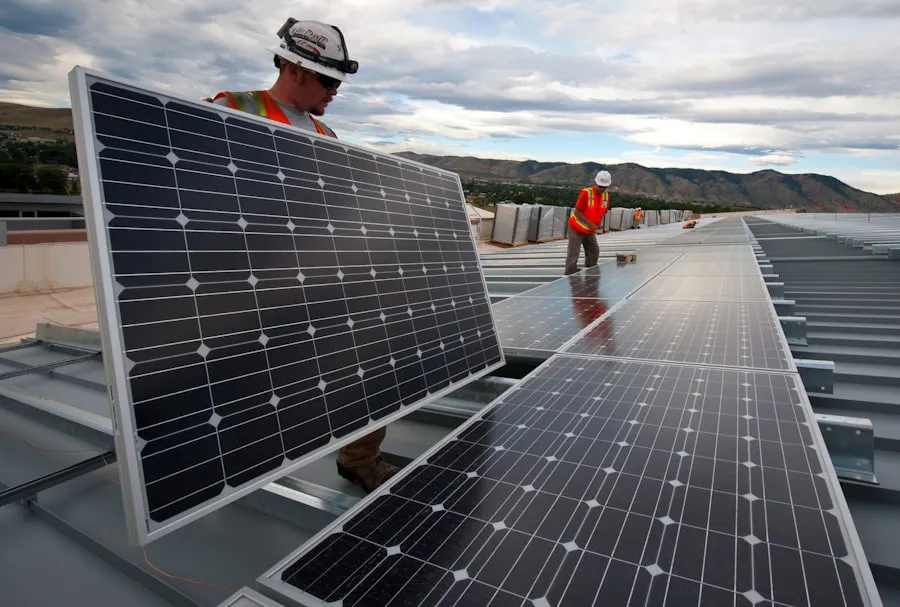
Most cattle sheds have tin or cement sheet roofs. Panels should be fixed with non-penetrative clamps on the sheet seams or on purlins, so the roof stays watertight. The Gwalior-Chambal belt sees strong pre-monsoon dust storms, so the structure must be hot-dip galvanised and properly anchored. Ammonia and moisture inside sheds can corrode cheap fittings; ask for galvanised or stainless fasteners. Keep inverters and batteries away from the animal area.
Water for the animals
A buffalo drinks a large quantity of water every day in summer, and sheds are washed twice a day. Many dairies on the edge of town pump this from a borewell with a motor on the dairy connection, which a rooftop plant covers. Dairies on farmland without a connection often still use a diesel engine for this water. There, a stand-alone solar pump with an overhead tank is the simplest answer: it fills the tank in the sunny hours, and gravity supplies water through the evening and night. The tank should hold at least a full day's need so that a cloudy day does not leave the animals short.
A worked example
Consider a dairy near Gwalior with 30 buffaloes, a bulk chiller, two milking machines, a chaff cutter, a pump and summer fans. An 8 kW plant would make about 11,600–12,000 units a year. If the dairy pays a non-domestic tariff, those units are worth a large share of its annual bill, and the plant pays for itself within a few years.
Working out payback
Take the units the plant will make in a year, multiply by your tariff per unit, and divide the system cost by that saving. For dairies on non-domestic tariffs, payback of three to five years is typical, after which the plant keeps saving for two decades. Add the value of avoided milk spoilage if your area sees frequent cuts — for some dairies that alone justifies the battery.
Talk to us
Sunvera Energy designs dairy solar systems from its office at Kampoo, Gwalior, and its head office at Pichhore. Send photos of the shed roof, a list of machines and 12 months of bills to +91 77103 07937, and we will suggest a size and an honest payback estimate.
Frequently Asked Questions
It depends on the animals and machines. Small dairies with 10–20 animals often need 3–5 kW, medium dairies with milking machines and a bulk chiller 5–10 kW, and larger dairies 10–15 kW or more. Size from 12 months of electricity bills and a list of machines, not a guess.
Only with a battery. A plain on-grid system switches off when the grid fails. A hybrid inverter with a battery keeps the chiller, a pump and some fans running for several hours, and still earns net-metering credit when the grid is available.
Only if the system is on a domestic connection in the family home. A dairy with its own non-domestic connection does not get the subsidy, but its higher tariff means each solar unit saves more, and payback of three to five years is typical.
Yes, with non-penetrative clamps on the sheet seams or purlins so the roof stays watertight. Use a hot-dip galvanised, storm-anchored structure and corrosion-resistant fasteners, because ammonia and moisture inside cattle sheds can rust cheap fittings within a few years. Keep the inverter and batteries away from the animal area.
Get a free site survey & PM Surya Ghar subsidy guidance.