
Rice mills are among the biggest electricity users in Balaghat. Huskers, whiteners, polishers, graders, colour sorters and elevators run long daytime shifts, and the monthly bill can run into lakhs during the milling season. Solar can cut a large share of it — but a mill is not a house, and owners rightly ask hard questions first. Here are the eight we hear most, with straight answers.
Key Takeaways
- Size the plant to the mill's daytime base load, not its peak.
- Plants of 50–200 kW cost about ₹45,000–50,000 per kW.
- Each kW makes about 1,400–1,450 units a year in Balaghat.
- Husk dust needs weekly cleaning in the milling season.
- Payback is typically three to four years.
1. How big should the plant be?
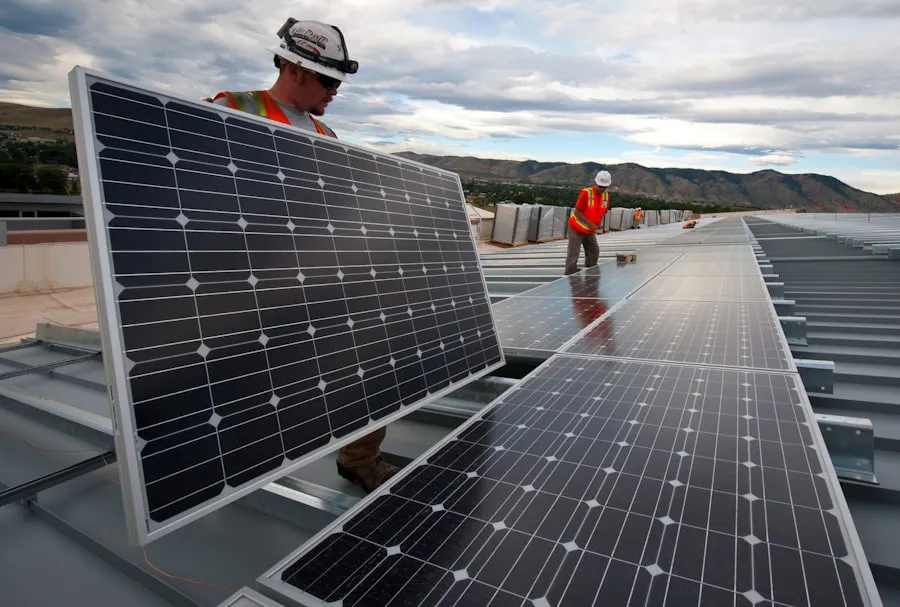
Not as big as the connected load. A mill with 250 kW of motors may draw 120–150 kW steadily through a shift, with peaks when machines start. The plant should be sized to that steady daytime base load, and to the roof and the sanctioned load or contract demand. Sizing larger means more units are exported to the grid at a lower settlement rate. A study of twelve months of bills and the shift pattern gives the right number; for many Balaghat mills it falls between 75 and 150 kW.
2. What does it cost?
| Plant | Approx. price | Units a year |
|---|---|---|
| 50 kW | ≈ ₹22.5–25 lakh | 70,000–72,500 |
| 100 kW | ≈ ₹45–50 lakh | 1,40,000–1,45,000 |
| 150 kW | ≈ ₹67.5–75 lakh | 2,10,000–2,17,500 |
Prices include panels, three-phase inverters, non-penetrative mounting, cabling, protection, monitoring and approvals.
3. Can our old sheet roof take it?
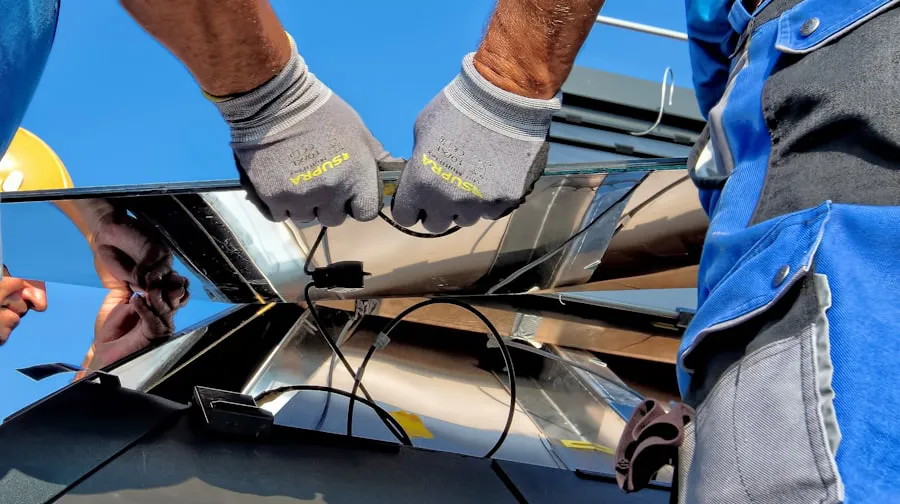
Usually yes, but it must be checked. Panels and mounting add about 12–15 kg per square metre. We inspect purlins, trusses and the condition of the sheets. Rusted or thin sheets should be replaced before panels go up, because replacing them later means removing the plant. On sound roofs we clamp to the sheet seams or a light rail, so no holes are drilled and the roof stays watertight through the monsoon.
4. What about husk dust?
It is the biggest operating issue for mill plants. Fine husk and bran dust can cut output noticeably within two weeks in the dry season. Good design helps: walkways between rows, a water point on the roof, a slightly steeper tilt and panels placed away from the aspirator and husk outlets where possible. During the milling season a weekly rinse with low-TDS water keeps output close to its best. Build this into the plan from day one.
5. What happens when the mill is not running?
Mills slow down in parts of the monsoon and between procurement cycles. The plant keeps producing, and units the mill does not use are exported through the net meter and credited under the state's rules. That is another reason to size for the base load: a right-sized plant uses most of its units on site through the year.
6. How long do approvals take?
We prepare the single-line diagram and protection scheme and file the net-metering application with MPPKVVCL's Balaghat circle. Feasibility, inspection and meter testing usually take four to eight weeks for an LT mill, and longer for HT connections, which have additional steps. Installation itself takes one to three weeks depending on size. Planning the work for the months after the milling season keeps disturbance low.
7. What is the real payback?
Take a 100 kW plant costing about ₹45–50 lakh and producing 1,40,000–1,45,000 units a year. If most of those units replace grid units at an effective industrial cost of around ₹8–9 per unit, the plant saves roughly ₹11–13 lakh a year, before depreciation benefits. That is a payback of about three to four years, after which the plant keeps saving for two decades. Your own tariff, demand charges and shift pattern decide the exact figure.
8. How do we pay for it?
Most mill owners use a term loan from their existing bank, often with the EMI close to the monthly saving. Accelerated depreciation on the plant usually reduces income tax in the early years, which many owners find as valuable as the electricity saving; ask your CA. Sunvera Energy works with SBI, HDFC, PNB and Bank of Baroda and prepares the project report the bank needs.
Bonus: what to check in a mill solar quote
- Panel brand, model and wattage, and the inverter brand and model.
- Mounting method for your roof, and who checks the purlins and trusses.
- Cable sizes, protection devices, earthing and lightning arresters.
- Monitoring, cleaning access and a water point on the roof.
- Who handles MPPKVVCL approvals, and the expected timeline.
- Warranty terms, who honours them, and the O&M plan after handover.
Compare two quotes line by line rather than on the total. A lower price often hides a lighter structure, thinner cables or missing protection that will cost more over 25 years on a dusty mill roof.
A note on power factor
Many mills pay power factor penalties because of large motors. Solar does not fix this on its own, and in some cases the solar plant can make the measured power factor look worse because it supplies active power while the grid still supplies reactive power. Check your bill for these charges; a correctly sized automatic capacitor panel alongside the plant solves the problem.
Start with a mill study
Send twelve months of bills, your connected load and shift timings to +91 77103 07937, or visit the Sunvera Energy office at Ward No. 28, Saraswati Nagar, Balaghat. We will inspect the roof, study the load and give you a written proposal with units, savings and payback.
Frequently Asked Questions
It should match the mill's steady daytime base load, not the full connected load. For many Balaghat mills that is 75–150 kW, limited also by roof area and the sanctioned load or contract demand. A study of twelve months of bills and shift timings gives the right size.
About ₹45–50 lakh, at ₹45,000–50,000 per kW. It produces around 1,40,000–1,45,000 units a year in Balaghat and typically pays back in three to four years at industrial tariffs, before depreciation benefits.
About once a week during the milling season, because husk and bran dust settle quickly and can reduce output within two weeks. In the monsoon, rain does most of the cleaning.
No. Solar supplies active power, so it does not correct power factor and can sometimes make the measured figure look worse. An automatic capacitor panel sized for the mill's motors, installed alongside the plant, removes the penalty.
Get a free site survey & PM Surya Ghar subsidy guidance.